Three weeks before the fall semester began, I was diagnosed with stage IV breast cancer in my bones. It was a bit of a shock. I am only 52. Within the course of one week, I went from learning to row on Cayuga Lake to struggling to sit up. A few days later, I was hospitalised due to complications.
With treatment, I was able to manage my symptoms well enough to teach my favourite course, the year-long State Policy Advocacy Clinic. In this course, students work with state legislators, executive agency officials, academic researchers and community organisations to design and advocate for evidence-based public policies that promote opportunity for the most vulnerable people in New York State. The clinic has 30 students, 20 active projects and about 15 active stakeholders and partners. Teaching it is exhausting when I am healthy. How could I manage it when sick?
The answers are below – and many of the lessons are transferable regardless of one’s portfolio or one’s health.
First, students can handle hard things when you address them openly. I was initially afraid to tell my class that I was sick. I didn’t want to upset anyone who had lost a loved one to illness. I didn’t want anybody to leave the clinic. However, I knew I had to tell them because my illness would affect my teaching, mentorship and ability to help them in future.
Not one left the course. Conversely, my students seemed to respond to the news by redoubling their dedication to our shared project. I made it clear there was no place I’d rather be than with them, and they took that to heart.
Second, I learned that it is possible to let certain things go if you seek help with honesty and humility. As a lawyer, I am used to having tremendous attention to detail and excellent executive functioning skills. When I am on painkillers, however, executive functioning is the first faculty to suffer. My big-picture thinking and imagination are still there but I make little errors, such as scheduling mistakes, that I would not ordinarily make. And I have to nap in the afternoon. So I have to rely more heavily on our clinic’s teaching staff and alumni to guide current students.
I could be embarrassed by my weaknesses and let that distract me from our clinic’s mission. But I choose to be transparent about my limitations and trust that my “value-add” to my students has nothing to do with my ability to manage scheduling details. I tell them openly that I will make mistakes and that I am relying on them to correct me, gracefully and efficiently. I sleep when I need to so that when I am awake I can be fully present. And I say “thank you” to our teaching staff more often than I say “sorry”.
Third, I have learned to ignore competition and pettiness in myself and others. Things that used to bother me have absolutely no purchase on me any more. In their stead, I find myself with an excess of creativity and focus.
People often describe a strange freedom of old age, whereby one stops caring so much what others think. What if we could reach this point earlier? Learning not to take everything quite so seriously would have saved a lot of energy over my career but I am grateful even for this belated sloughing off of small-mindedness.
Fourth, I am more deliberate about how I spend my time. An inveterate people pleaser, my default answer to every request for help used to be yes. I accepted obligations I did not particularly want in order to be a good team player. I am still a team player but I focus more deliberately on work that only I can do. Again, it would have benefited me to start doing this earlier.
Finally, I have learned that my teaching strategy pays off. Teaching is about building community. Although my students’ relationships with me are important, what really matters is their relationships with one another; in terms of learning, peer effects are everything. Despite my sickness, I can continue to build community among our clinic’s stakeholders, alumni, teaching staff, supporters and students. Indeed, my illness has forced me to depend on students and clinic alumni more than usual, rather than to try to do everything myself. They welcome the trust I place in them and rise to the occasion.
For example, I had to miss most of the first class of the semester because of an appointment with a specialist in New York City that could not be moved. I was heartsick as the first class sets the tone for the year. Then I thought to ask four outstanding clinic alumni to guest lecture in my place. The conversation, they told me, was more open and candid than the early-semester conversations they remember – and the students benefited from meeting role models.
Teaching is an inherently hopeful discipline. You are making a bet that investing heart and energy now will pay handsomely in the future. You are fostering conversations among generations. In my clinic, these conversations take place not just in the classroom but in community centres, high schools, legislative offices, health clinics and farms, leading to connections between people and ideas that go far beyond the sum of their parts. But the value of community-building is the same in a non-clinical course taught in a classroom. Students learn best when they feel a sense of belonging in a community with a shared goal. They grow most in an environment in which knowledge is created together, rather than simply handed down from the professor to the student.
As a professor, there is never enough time to pursue all the exciting new ideas. I feel that acutely now. But then I am reminded that it’s OK, I don’t have to do all the work myself. I have my students, and they will have one another.
If you are currently healthy, I understand why you would not want to spend too much time thinking about what it feels like to have a significantly shortened time horizon: I certainly did not. However, scarcity brings a sharpness of focus for which I am profoundly grateful – and which I only wish I had gained earlier.
So I hope that colleagues with many more semesters ahead of them can benefit from the lessons I have learned in this liminal place. It is an odd place, and a bittersweet place. But it is unexpectedly beautiful.
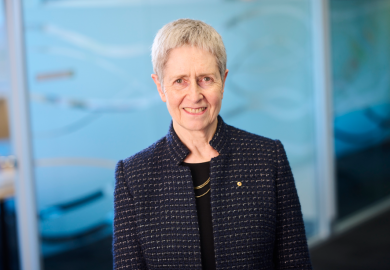
Alexandra Dufresne is professor of the practice at the Jeb E. Brooks School of Public Policy at Cornell University, where she directs the State Policy Advocacy clinic.
Register to continue
Why register?
- Registration is free and only takes a moment
- Once registered, you can read 3 articles a month
- Sign up for our newsletter
Subscribe
Or subscribe for unlimited access to:
- Unlimited access to news, views, insights & reviews
- Digital editions
- Digital access to THE’s university and college rankings analysis
Already registered or a current subscriber?