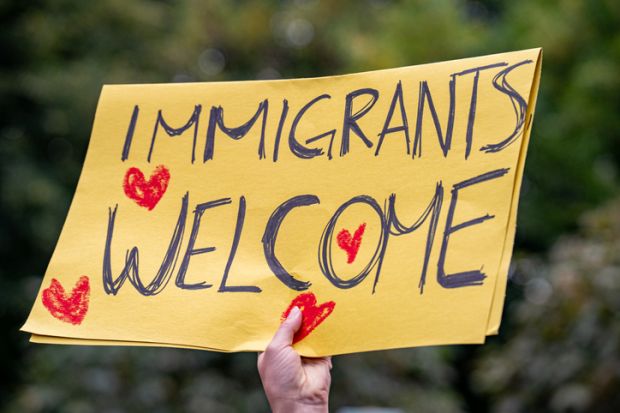
Universities are “stuck between a rock and a hard place” in how they respond to Immigration and Customs Enforcement (ICE) agents, according to legal experts.
The Trump administration’s immigration crackdown reached new heights with the killing of two US citizens in Minneapolis last month, but universities have been continually grappling with how to deal with the issue since campuses first started being targeted last spring.
“While we’ve certainly seen a lot of publicity about targeted ICE enforcement actions in cities like Minneapolis, there is still ICE enforcement action happening on campuses, just not as visibly,” said Stephen Yale-Loehr, retired professor of immigration law practice at Cornell Law School.
Yale-Loehr said institutions’ responses have been “all over the place” – with campuses in Florida being directed by state officials to actively cooperate with ICE but many others working to protect students from being deported.
Much of this work is happening in private, however, and administrators have generally resisted pressure to speak out from student protesters on many campuses – including Cornell, the University of Arizona, and Columbia University, where a dozen people were recently arrested.
University leaders could cite First Amendment rights and express their opinions, said Yale-Loehr, “but we’ve seen this administration go after people who criticise the government, so there is some risk there”.
“Most universities try to work behind the scenes to determine what’s going on to help students, but without making formal public statements criticising ICE enforcement operations.”
César Cuauhtémoc García Hernández, a law professor at Ohio State University, said moves towards institutional neutrality, which came about after a backlash to “statement culture” in the wake of the Black Lives Matter protests, have removed universities’ traditional “moral leadership” role and created a “vacuum”.
“A statement in support of students is always a meaningful one. The students want to know that the people who lead the universities where they’re not only studying but also living are invested in their well-being.
“There’s a deafening silence coming from university leaders, and students have every right to complain about that, and to push their university administrators and state legislators to reverse course.”
But John Banzhaf, professor of public interest law at George Washington University Law School, said many institutions realise that statements are unlikely to have any noticeable impact.
In response to student pressure, some institutions have added their names to lawsuits against ICE, held public meetings, or banned ICE representatives from hiring fairs.
But Banzhaf said these are marginal and largely ineffectual steps in the face of unrealistic student demands, and risk angering the White House.
“Clearly, universities are stuck between a rock and a hard place regarding ICE enforcement.”
Some protesters have recently demanded faculty designate their university a “sanctuary campus”, which limits cooperation with ICE.
But Peter Mancina, a cultural and political anthropologist at Rutgers University’s Law School, said institutions have faced significant repercussions as a result of doing so.
“The public pronouncements of sanctuary don’t actually protect immigrants. It is very much a pageantry.
“They can say that they are protecting them, but then ICE can just ride roughshod over that.”
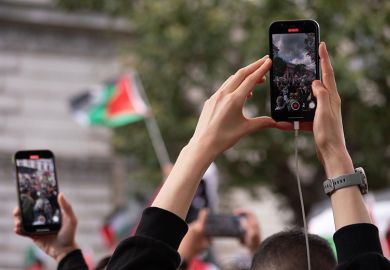
Instead, he said colleges should consider pursuing a policy of “silent sanctuary” and empower their students and faculty to take out their phones and record the actions of ICE on campus.
“The real heroes again are the people who are in the streets who are videotaping police officers and ICE doing things to immigrants that are abusive, and that’s where the focus should be.”
Register to continue
Why register?
- Registration is free and only takes a moment
- Once registered, you can read 3 articles a month
- Sign up for our newsletter
Subscribe
Or subscribe for unlimited access to:
- Unlimited access to news, views, insights & reviews
- Digital editions
- Digital access to THE’s university and college rankings analysis
Already registered or a current subscriber?