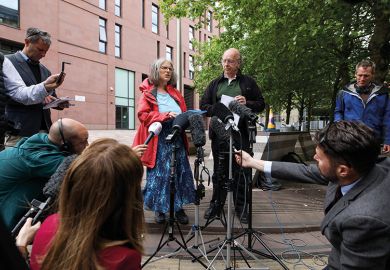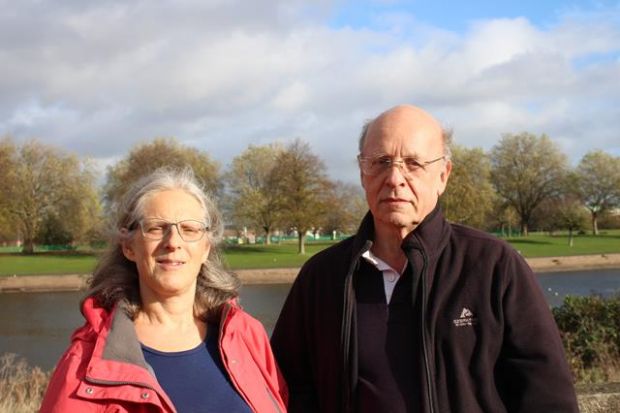
Bereaved parents whose children died by suicide while at university are taking their fight back to Westminster, claiming that more students are dying because of politicians’ refusal to impose a “duty of care” on institutions.
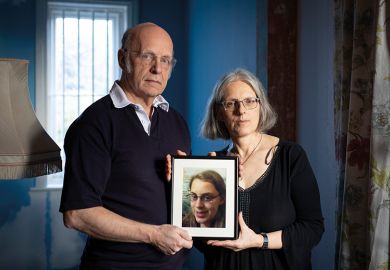
Robert and Maggie Abrahart, whose daughter Natasha died in 2018, have long argued that the government needs to make clear what is expected of staff at universities when dealing with students in crisis.
Previously the High Court ruled that the University of Bristol had contributed to Natasha’s death by failing to adjust its assessments to account for her anxiety disorder.
On 13 January politicians will, for the second time, debate the merits of statutory duty of care for universities.
Robert Abrahart said the last time the matter was discussed in Parliament under the Conservative government, in 2023, conversations became “diverted” away from duty of care to wider conversations around mental health support. “But that’s not what we were asking for.”
“We want a statutory duty [for universities] to behave reasonably, and introduce a minimum standard of expected behaviour from staff and institutions more generally,” he said. Currently, there is no general legal duty for universities to monitor attendance, follow up repeated absences or act on known patterns of risk unless they have expressly assumed responsibility for the student, he noted.
He said a duty of care is “not about suicide prevention, although in my view it would help”, and noted that there have been roughly 400 student suicides since the last parliamentary debate on the topic – “which is more than three a week”.
The previous higher education minister, Robert Halfon, argued at the time that a legal duty of care was not necessary because it already exists under common law, but Abrahart said this was not explicit enough.
“For someone to say, ‘we'll get there eventually’ doesn’t really help if your child’s just died. There seems to be some inertia, and what we’re looking for is some mechanism to drive this forward with a bit of speed. It’s not that nobody knows what you shouldn’t do. They just don’t do it,” he said.
He argued that there was “no urgency” from politicians to address the issue, adding “they’re not the ones burying their children”.
Introducing a duty of care would give staff “clear guidance” and is about ensuring universities and staff “aren’t careless in the way they treat their students”.
Campus spotlight guide: Make good mental health a university priority
He noted that current law requires universities to “not cause harm” to students but “universities typically don’t go around harming students”. Instead, a duty of care needs to be more active and explicit in safeguarding students, bringing universities’ responsibilities in line with the duty of care owed by employers to their employees, argued the retired university lecturer, who has been joined in the campaign by other parents of students who died by suicide.
“Change should have happened years ago. It wasn’t a big ask…if we could have saved half of the students, because I believe most of these are preventable deaths, that’s 200 kids.
“Most parents are shattered [after the loss of their child]. They’re destroyed. The fact that you’ve got 20 or 30 prepared to speak out is quite amazing. If this can is to be kicked down the road yet again by this government, how many deaths will it take? One hundred and sixty [student suicides] a year is the latest estimate – that’s quite a lot in my book.”
He said that although he had been hopeful that the change to a Labour government in July 2024 might have brought progress, he added: “The status quo is so entrenched it’s going to be a difficult thing to move”.
James Naish MP, who scheduled the debate, said although universities play a “central role” in young people’s lives, “the law remains unclear about what responsibilities and duties they have to their students where serious harm is foreseeable”.
“More and more students are seeking help from their universities with their mental health yet there is still no clear legal framework setting out a baseline of what universities are expected to do when harm is foreseeable and vulnerability is evident,” the Labour politician told Times Higher Education.
“The case of my constituents, the Abraharts, made clear that this is an issue of wide significance that the courts cannot resolve on a case-by-case basis. In the absence of legislation, bereaved families are left to seek answers only after tragedy has occurred. This is unacceptable.”
juliette.rowsell@timeshighereducation.com
• If you’re having suicidal thoughts or feel you need to talk to someone, a free helpline is available around the clock in the UK on 116123, or you can email jo@samaritans.org. In the US, the National Suicide Prevention Lifeline is 1-800-273-8255. In Australia, the crisis support service Lifeline is 13 11 14. Other international suicide helplines can be found at www.befrienders.org.
Register to continue
Why register?
- Registration is free and only takes a moment
- Once registered, you can read 3 articles a month
- Sign up for our newsletter
Subscribe
Or subscribe for unlimited access to:
- Unlimited access to news, views, insights & reviews
- Digital editions
- Digital access to THE’s university and college rankings analysis
Already registered or a current subscriber?