When New Zealanders faced the polls a little over two years ago, universities were not front of mind. There was little contrast in the higher education policies of the major parties – a reflection of the sector’s general insignificance as a vote-winner.
There was one consequential distinction, however. The main contestants had starkly different visions for medical education. The Labour Party, then in government, wanted to expand places at the two longstanding medical schools at the universities of Auckland and Otago. The centre-right National Party supported the establishment of a third medical school at the University of Waikato, a couple of hours’ drive from Auckland.
National’s convincing election win proved to be no guarantee that the third medical school, first proposed in 2016, would get off the ground. A sceptical coalition partner, the Act Party, demanded a full cost-benefit analysis “before any binding agreement”. Almost two years passed before cabinet approved the new school’s business case.
It is a case study of the complex politics of medical education in a world screaming out for more doctors. Medical schools are a jewel in the crown for any university because of the prestige they carry. But the sheer cost of the training, and the difficulty of securing clinical placements for students, make it an uphill ride.
The perils of emigration add to the complexity. Authorities throughout the demographically challenged West are desperate to attract foreign-trained doctors, while retaining those trained at home.
New Zealand’s All Blacks routinely trounce Australia on the rugby field, but the tide in a cross-Tasman tussle for medical professionals is running firmly in the other direction. Almost 2,200 Kiwi doctors were practising in Australia in 2019, according to the Medical Council of New Zealand.
Their absence has exacerbated a ballooning gap in health provision back home. Aotearoa had a deficit of 1,700 doctors in 2023 and the shortfall was set to double by 2032, according to a Health New Zealand report. The problem was self-perpetuating, with excessive workloads causing more doctors to flee.
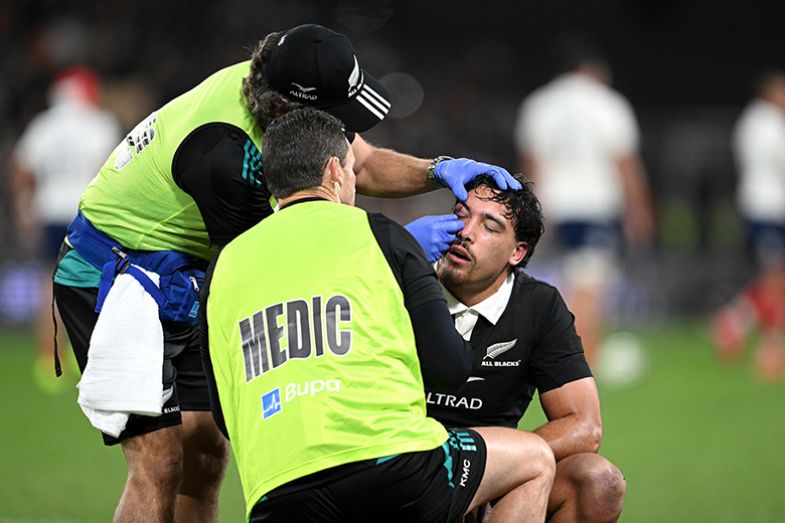
“Increasing numbers…are leaving because the working conditions created by these shortages are not sustainable,” University of Otago academics warned in the New Zealand Medical Journal. Locally educated doctors were more likely to stay put in Aotearoa than their overseas-trained peers, the authors noted.
The third medical school could help stem the exodus, its proponent believes. Waikato vice-chancellor Neil Quigley said the graduate-entry school, which is scheduled to begin operations in 2028, would present a less expensive and quicker option for Kiwis who decided to pursue careers in medicine after completing degrees in other fields.
The savings would be enough to deter at least some of the hundreds of New Zealanders thought to be studying medicine in Australia at any time, he argued. Lured by lower tuition fees and a greater range of programmes. Quigley said many were unlikely to return to practise in their homeland.
The schools at Auckland and Otago offer undergraduate programmes. Most applicants must complete a year of health sciences or biomedical sciences at either of the two universities to make themselves eligible for the five-year medicine degrees.
Graduates are also eligible, and comprise about 30 per cent of the two schools’ students, but they are required to complete the full five-year programmes. Most medicine degrees in Australia are four-year graduate-entry courses.
Quigley said New Zealand graduates could save themselves a year’s study by crossing the Tasman for medical education. They also benefited from lower tuition fees – currently A$13,241 (£6,556) a year for medical degrees in Australia, compared with NZ$18,432 (£7,914) at Otago and about the same at Auckland. In combination, this made the Australian option one-third less expensive.
Under an agreement between the Canberra and Wellington governments, New Zealanders qualify for subsidised university places in Australia. However, most cannot access Australia’s student loan scheme and must pay their fees in advance.
Quigley said the upfront fees, coupled with living costs across the Tasman, constituted a considerable barrier. Nevertheless, he personally knew about a dozen Kiwi graduates who had “followed this path” in their mid-twenties after saving some money.
Former health minister Shane Reti last year estimated that about 360 New Zealand citizens were training in Australian medical schools, although his office did not supply a source for that figure. Department of Education statistics obtained by Monash University policy analyst Andrew Norton show that about 420 New Zealand-born medical students are educated in Australia each year.
Quigley said he expected Waikato’s school to be a “viable alternative” for many such people, although it would probably not deter Kiwis from enrolling in high-ranking institutions like the University of Sydney.
“That’s the basis, I think, on which you’d want competition to occur,” he said. “If students can get into Sydney, good on them. I think Waikato’s school will reduce the flow of New Zealanders to Australia. It won’t stem it completely, but you wouldn’t want it to.”

Sceptics say the flight to Australia is more about lack of places than cost. “Otago and Auckland are allocated a limited number of government-funded places each year and are consistently oversubscribed with applicants,” a source said. “This is the reason we have so many Kiwi medical students in Australia.”
Funding for medical schools is often highly contested, sparking vigorous debate and behind-the-scenes lobbying. In Australia, Charles Sturt and La Trobe universities’ proposal for a rural medical school took around a decade to realise, amid opposition from students worried about shortages of internships necessary to complete training and bickering between politicians.
In the UK, several universities have opened medical schools that cater exclusively to international students because they cannot secure funding for domestic places.
In New Zealand, opposition to Waikato’s proposal has largely focused on the cost. Auckland and Otago contend that it would be more straightforward and cost-effective to fund additional places at their schools.
A report by professional services company PwC, commissioned by the two universities, found that the pair could accommodate an extra 300 students – compared with the 120 planned at Otago – with “less implementation complexity and risk”, and with no new capital funding required from government.
The PwC report found that Auckland and Otago’s teaching centres and associated facilities provided “extensive coverage across New Zealand” and “a diverse range of entry pathways”, including special admission schemes focused on Māori, Pacific and rural communities.
The government committed NZ$83 million of the third school’s NZ$220-plus million setup costs when it approved the Waikato proposal. Critics have accused Waikato of developing an inappropriately close relationship with the National Party, the senior member of the governing coalition.
The university contracted consultancy services from former National science and innovation minister Steven Joyce, while Quigley has been accused of writing the then opposition party’s pre-election policy on medical schools.
He denied this, saying National had requested a copy of a business case the university had prepared years earlier, and then adopted it as policy. Joyce had been contracted for information technology and marketing advice unrelated to the medical school, Quigley said.
A report by consultancy firm Nera, commissioned by Waikato, found that the government could save NZ$13 million annually by shaving a year from the duration of graduate-entry students’ medical degrees. If the savings were used to train more doctors, the downstream benefits to New Zealand’s economy could be massive – potentially as high as NZ$948 million, in present value terms.
The report found that New Zealand’s current medical schools were very large by global standards. The proposed 300 additional places would make them bigger than every medical school in Australia, the UK and the US. Nera said the only OECD country that had fewer medical schools per head of population was Luxembourg, which does not have a medical school.
The report also found that the “competitive tension” produced by Waikato’s medical school could drive “innovation and productivity gains” of up to 5 per cent in the cost of medical training, bankrolling more university places and ultimately ushering another NZ$660 million in economic benefit.
Quigley said one overdue innovation was to recognise the prior knowledge of professionals like pharmacists, physiotherapists and nurse practitioners. “If they want to be doctors, they have to start their medical studies at the beginning,” he said. “There should be ways to give people in allied health credit for what they already know.”
He said Waikato’s school would also help improve diversity in New Zealand’s medical enrolments. Mature-entry students had life experience and more established career plans than recent school-leavers, he said.

“One of the benefits of a graduate-entry programme is that it’s easier to identify the students who will be able to cope with the strains of working in primary care. With students who are 18 years old, it’s harder to identify the personal characteristics that will make them good doctors.”
Times Higher Education understands that both Auckland and Otago have considered introducing graduate-entry medical programmes, but the ideas never proceeded – in Otago’s case, because of a lack of government support.
Auckland and Otago also proposed a School of Rural Medicine, in which Waikato and other institutions could have participated, but the idea was quashed by then education minister Chris Hipkins.
The financial pros and cons of graduate entry are difficult to disentangle. While postgraduate medical degrees are shorter and therefore lower cost to deliver, they also entail the expense of previous study. But students often divert into medicine after starting out in other fields, so taxpayers would have incurred the expense of the initial degree anyway.
Otago highlights its Rural Medical Immersion Programme as evidence of its innovation. In 2020 it won the ASPIRE award for excellence in medical education assessment from the International Association of Health Professions Education – an honour achieved by just a handful of institutions globally including Leeds School of Medicine and the University of California, San Francisco.
“Many people still imagine medical school as endless lectures, anatomy labs and late-night cramming,” noted Otago’s former dean of medicine, Tim Wilkinson. “That image is as outdated as leeches and handwritten prescriptions.
“If the past teaches us anything, it’s that medical education must be ready to evolve. The future won’t just be about what we teach, but how, where and to whom.”
For Otago and Auckland, one of the most challenging tasks will be rearranging their clinical placements. Training opportunities in hospitals and surgeries are perennially in short supply and have been divvied up over the decades by the two institutions, which will now have to accommodate a third player.
“Our priority remains constructive collaboration with both Waikato and Auckland universities to work through clinical placements for students in the future,” said Otago’s pro vice-chancellor of health sciences, Megan Gibbons. “We remain focused on evolving our programmes and continuing to deliver graduates who are well prepared to serve the health needs of all New Zealanders.
“We are proud of our 150-year legacy of delivering high-quality, research-informed medical education. We have previously expressed concerns about aspects of the government’s process in making a decision about introducing a new medical school. But we respect that a decision has been made and welcome the government’s commitment to increasing medical training capacity.”
An Auckland spokeswoman said the Waikato school represented “a positive investment in medical education in New Zealand”, and the three universities had been “collaborating constructively…to ensure medical training is accessible for all students across the country. “We are also working closely with…Health NZ and the Ministry of Health to improve capacity for clinical placement supervision for medical students. The relationship we have established is based on trust, transparency and goodwill. The three universities are working together to address the medical workforce shortage.”
Quigley said the new arrangement would deliver diversity as well as collaboration. “Waikato has got its mandate for a medical school because we’ve agreed to do pretty much everything as differently as possible from what Auckland and Otago do.”
Register to continue
Why register?
- Registration is free and only takes a moment
- Once registered, you can read 3 articles a month
- Sign up for our newsletter
Subscribe
Or subscribe for unlimited access to:
- Unlimited access to news, views, insights & reviews
- Digital editions
- Digital access to THE’s university and college rankings analysis
Already registered or a current subscriber?